4 Augmented Reality Services Driving Industrial Transformation
The enterprise procurement conversation changes entirely the moment spatial computing moves from a marketing gimmick to a mandatory operational layer. Executives often view augmented reality as a monolithic category, assuming the same vendor that builds a virtual consumer showroom can also deploy hands-free maintenance overlays for a factory floor. This assumption breaks down immediately in production. The moment a warehouse manager requires offline schematic validation, or a logistics team requires real-time routing without mobile screens, the underlying technical architecture must shift. Identifying the correct provider requires stripping away the visual novelty and examining exactly how the data reaches the end user. This is where evaluating augmented reality services becomes an exercise in network latency, hardware provisioning, and process compliance.
Quick Summary
Augmented reality solutions diverge fundamentally based on how the spatial data is delivered to the end user. Selecting the right provider dictates whether your workforce uses web browsers, custom industrial visors, or deeply integrated enterprise software.
- WebAR platforms remove deployment friction but limit visual complexity.
- Custom hardware integrations solve industrial safety constraints but spike capital expenditure.
- Pre-built field software standardizes maintenance workflows but restricts creative design.
- Immersive studio builds deliver maximum graphical fidelity but operate on slow agency timelines.
Table of Contents
- How augmented reality services map to business goals
- 1. Aryel
- 2. Youbiquo
- 3. Esimple
- 4. Oniride
- Matching the delivery model to your operation
- Recommended Reads
Comparison Table
| Product | Core Delivery Model | Features | Pros | Cons | Target Audience |
|---|---|---|---|---|---|
| Aryel | Self-Service WebAR | Browser-based WebGL, analytics dashboard, cloud asset hosting | No app download required, fast campaign iteration, central interaction telemetry | 10GB storage limit on Enterprise, 10k view cap, restricted polygon handling | Consumer marketing teams and digital advertising agencies |
| Youbiquo | Industrial Wearables | Custom hardware visors, onboard AI edge processing, depth sensors | Hands-free operation, local offline processing, physically hardened devices | High capital expenditure per unit, fails BYOD policies, complex IT lifecycle | Heavy industry and logistics operations |
| Esimple | Enterprise Custom Software | Prototypar virtual mockups, Livemote field checklists, ERP synchronization | Standardizes chaotic workflows, synchronizes live inventory, replaces physical prototyping | Enforces rigid workflows, weak for creative campaigns, heavy database integration | Field maintenance and technical training units |
| Oniride | Creative Immersive Studios | Native engine compilation, custom shaders, bespoke interaction design | Maximum graphical fidelity, tailored UI aesthetics, complex spatial physics | Slow agency deployment timelines, prevents rapid in-house updates, high iteration costs | Flagship brand activations and investor demonstrations |
How augmented reality services map to business goals
Before selecting a vendor, it is critical to filter the market through a specific lens: the Core Delivery Model. This classification axis determines where the computational heavy lifting occurs and who controls the deployment pipeline. Assessing these models requires evaluating the underlying infrastructure, much like vetting secure AI SEO platform architectures for uptime and latency. The market separates into four distinct categories.
First, Self-Service WebAR focuses entirely on deployment speed. These platforms bypass native mobile applications, relying instead on device browsers to anchor 3D objects. This model removes the friction of convincing a user to download software, prioritizing reach over high-fidelity graphics.
Second, Industrial Wearables move the processing power out of the cloud and directly onto the worker's head. By coupling proprietary software with custom-built smart glasses, this model solves the strict safety requirements of environments where workers cannot safely hold a mobile tablet.
Third, Enterprise Custom Software connects spatial computing to back-office logic. These providers deploy pre-built modules that hook directly into inventory and ticketing databases, turning abstract 3D overlays into actionable, standardized checklists for field technicians.
Finally, Creative Immersive Studios operate on a traditional agency model. They do not sell a software platform; they sell bespoke spatial artistry. Teams of technical artists compile native applications using heavy game engines, delivering visual perfection at the cost of rapid, self-serve agility.
Practical rule: Never procure specialized hardware before validating the software delivery model. If your workforce relies heavily on temporary contractors, mandating proprietary smart glasses creates an immediate provisioning and training bottleneck that software alone cannot fix.
1. Aryel
Overcoming the friction of app store downloads is the primary reason marketing teams route their procurement toward Aryel. It operates as an Italian WebAR platform built specifically for brands and agencies that need to deploy immersive marketing campaigns without requiring their audience to install custom software. When digital business transformation consulting firms map out omnichannel customer journeys, they frequently rely on this model to bridge physical print media directly to digital analytics pipelines.
The platform operates entirely within the mobile browser. WebGL and native camera APIs anchor 3D objects in the physical environment. Users skip compiling thick client code for iOS or Android. Instead, they upload 3D assets to Aryel's cloud infrastructure. The system compresses and serves these assets dynamically via a standard URL or QR code. Telemetry feeds back into a centralized analytics dashboard. The session natively tracks user interactions, dwell times, and conversion events. Engineering teams avoid this heavy workload. Marketing directors gain direct deployment control.
High-traffic consumer friction limits complex rendering
Massive-scale or highly complex deployments hit commercial and technical ceilings. According to its published pricing, the Enterprise plan restricts accounts to a fixed media library storage capacity. It also caps monthly delivery views. A global retailer expecting massive volumes of concurrent daily interactions hits this delivery wall. Engineering firms needing real-time rendering for massive CAD models face similar capacity constraints. These ceilings force a shift toward custom infrastructure.
I would deploy this platform if the objective is rapid, iteration-heavy consumer marketing where avoiding app installation friction significantly outweighs the need for high-fidelity spatial mapping.
Pros
- Eliminates mobile application store approval delays entirely.
- Operates natively across standard iOS and Android browsers without plugins.
- Centralizes interaction telemetry and dwell times in a single dashboard.
Cons
- Enterprise plan caps media library storage firmly at 10GB.
- Monthly campaign views are restricted to 10,000 interactions on standard enterprise terms.
- Browser-based WebGL rendering struggles heavily with massive unoptimized CAD files.
2. Youbiquo
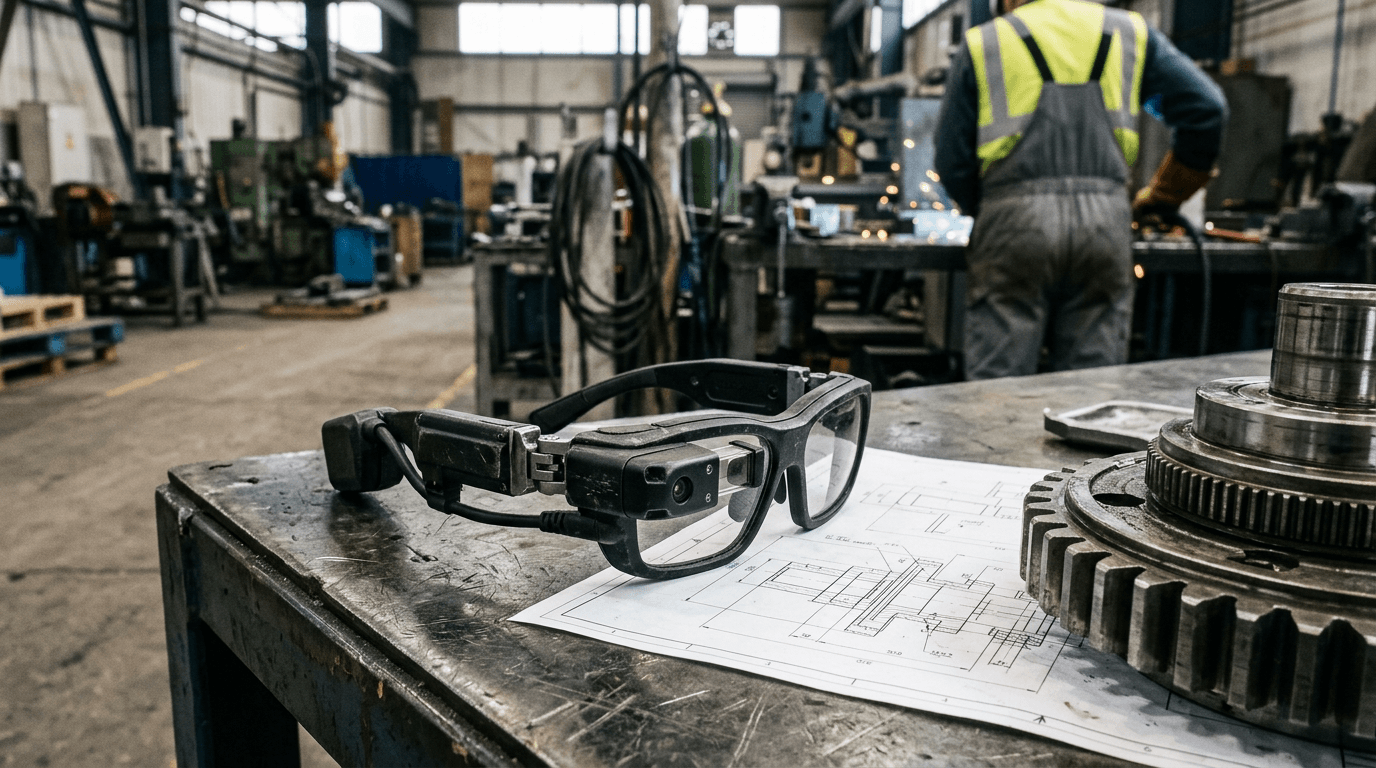
An assembly line technician with hands covered in industrial lubricant cannot comfortably swipe a tablet screen to check a wiring schematic. Youbiquo targets exactly this operational constraint, functioning as an Italian hardware and software developer that builds augmented reality smart glasses and AI-driven wearables designed strictly for harsh industrial environments.

Unlike browser-based overlays that rely on consumer smartphones, this provider engineers the actual physical visors alongside the operating software. The mechanism relies on onboard edge computing, where AI chips process environmental data locally through integrated depth sensors and cameras. This allows the headset to recognize machinery parts, overlay maintenance instructions directly into the wearer's field of vision, and stream live point-of-view video back to remote engineering teams. The hardware is designed to integrate into existing sdm services, allowing remote dispatchers to guide field workers through complex repairs in real-time without latency dependency on cloud servers. Processing data at the edge ensures that even deep inside a concrete manufacturing facility with poor cellular penetration, the spatial tracking remains stable.
Custom silicon investments require long-term procurement cycles
The dependency on proprietary hardware completely removes the flexibility of Bring-Your-Own-Device rollouts. If an organization's frontline workforce numbers in the thousands and experiences high seasonal turnover, outfitting every individual with specialized smart glasses becomes a prohibitive capital expense. Furthermore, maintaining these devices requires distinct IT hardware management protocols, moving the deployment out of simple software licensing and into physical asset tracking and maintenance.
I would hold off on this hardware approach unless hands-free spatial computing is a strict safety or workflow requirement, rather than merely a training enhancement.
Pros
- Hands-free operation suits hazardous manufacturing environments perfectly.
- Onboard AI processes telemetry locally without relying on cloud latency.
- Hardware visors are physically hardened against industrial wear and tear.
Cons
- High per-unit capital expenditure blocks rapid workforce scaling.
- Fails to support bring-your-own-device policies for temporary or contract workers.
- Custom hardware demands dedicated IT lifecycle management and physical repair protocols.
3. Esimple
The most common mistake executives make when modernizing field workflows is assuming that buying consumer headsets will automatically yield enterprise process improvements. Esimple counters this assumption directly as an Italian digital solutions company providing process innovation consulting, custom software development, and immersive 3D/AR/VR applications that tie into legacy business systems.
The provider structures its deployments around proprietary software products like 'Prototypar' and 'Livemote'. 'Livemote' operates as a smart field service management tool, taking unstructured maintenance tasks and standardizing them into step-by-step augmented reality checklists. When a field worker opens a work order, the software queries the central database, pulls the exact 3D spatial instructions for that specific asset, and anchors the diagnostic steps over the physical machine. This requires rigorous services engineering to connect the immersive front-end with back-office inventory systems while maintaining strict data privacy protocols for enterprise compliance. When a component is marked as replaced via the AR interface, the underlying ERP registers the stock depletion simultaneously, closing the operational loop.
Standardized workflow engines restrict creative spatial design
The rigid structure of pre-built field service software means it handles linear, predictable workflows exceptionally well but fails entirely when applied to open-ended or purely creative use cases. Organizations looking to build highly exploratory virtual showrooms or gamified brand experiences will find the architecture of tools like Livemote far too utilitarian. It is built strictly to minimize deviation and enforce process compliance, not to dazzle consumers.
This is the correct choice if the primary organizational mandate is reducing error rates in field maintenance and standardizing technical training across a distributed workforce.
Pros
- Livemote standardizes chaotic field maintenance into strict, measurable checklists.
- Direct ERP hooks synchronize parts inventory dynamically with spatial actions.
- Prototypar replaces expensive physical mockups with immediate digital twin validation.
Cons
- Pre-built logic engines force companies to adapt to the software's predefined workflow.
- Fails entirely at delivering highly creative, non-linear consumer marketing campaigns.
- Requires heavy back-end database integration and data mapping before launch.
4. Oniride
While platforms prioritizing utilitarian compliance focus heavily on rigid process enforcement, Oniride operates at the opposite end of the spatial computing spectrum. It functions as an Italian technology design studio focused entirely on crafting highly bespoke, visually complex virtual reality, augmented reality, and mixed reality applications.
The studio builds custom immersive environments from the ground up, typically relying on heavy-duty game engines like Unity or Unreal Engine rather than lightweight web protocols. The mechanism involves taking raw enterprise data - such as architectural CAD files, unoptimized 3D product meshes, or environmental scans - and manually retopologizing them for real-time rendering. By writing custom shaders and compiling native applications for specific spatial headsets, the team ensures that lighting, physics, and material textures react dynamically to the user's physical movements. This level of computational fidelity requires the application to run natively on the device hardware, completely bypassing the visual limitations inherent in cloud streaming or browser-based rendering.
High-fidelity agency builds resist rapid in-house iteration
The traditional design studio model fundamentally bottlenecks agility once the final application is delivered. Because the environments are compiled natively and rely on custom codebases, internal marketing or training teams cannot easily swap out 3D models, update text overlays, or change interaction logic without initiating a new statement of work with the studio. Organizations that require daily or weekly content updates will find this dependency commercially and operationally stifling.
I would reserve this studio approach strictly for flagship product launches, high-stakes investor demonstrations, or permanent installation pieces where absolute visual perfection overrides the need for frequent content updates.
Pros
- Delivers maximum graphical fidelity for high-stakes spatial environments.
- Custom shaders and physics engines heavily outpace standard web-based rendering.
- Tailors the exact user interface and interaction design to the client's specific aesthetic.
Cons
- The agency structure prevents in-house marketing teams from iterating daily.
- Compiling native codebases extends initial deployment timelines significantly.
- Operational agility drops immediately after the final application build is delivered.
Matching the delivery model to your operation
If your consumer base refuses to download mobile applications just to interact with a marketing campaign, route your procurement toward Self-Service WebAR. This category entirely bypasses app store friction, making it the only viable path for high-volume, low-commitment retail interactions.
When hands-free safety requirements dictate that workers cannot hold tablets on a factory floor, Industrial Wearables are the necessary choice. The high hardware cost is offset by the ability to process spatial telemetry locally at the edge, maintaining uptime in hazardous environments.
If the primary objective of your deployment is to lower field maintenance error rates, Enterprise Custom Software fits the requirement perfectly. By enforcing rigid AR checklists that communicate directly with existing ERPs, this software standardizes chaotic workflows into predictable data.
Finally, when absolute visual fidelity is the single metric of success for a critical spatial presentation, engaging Creative Immersive Studios delivers the necessary graphical polish. The tradeoff in agility is worth the bespoke interaction design required for flagship activations.