4 Application Services Ensuring Business Continuity in 2026
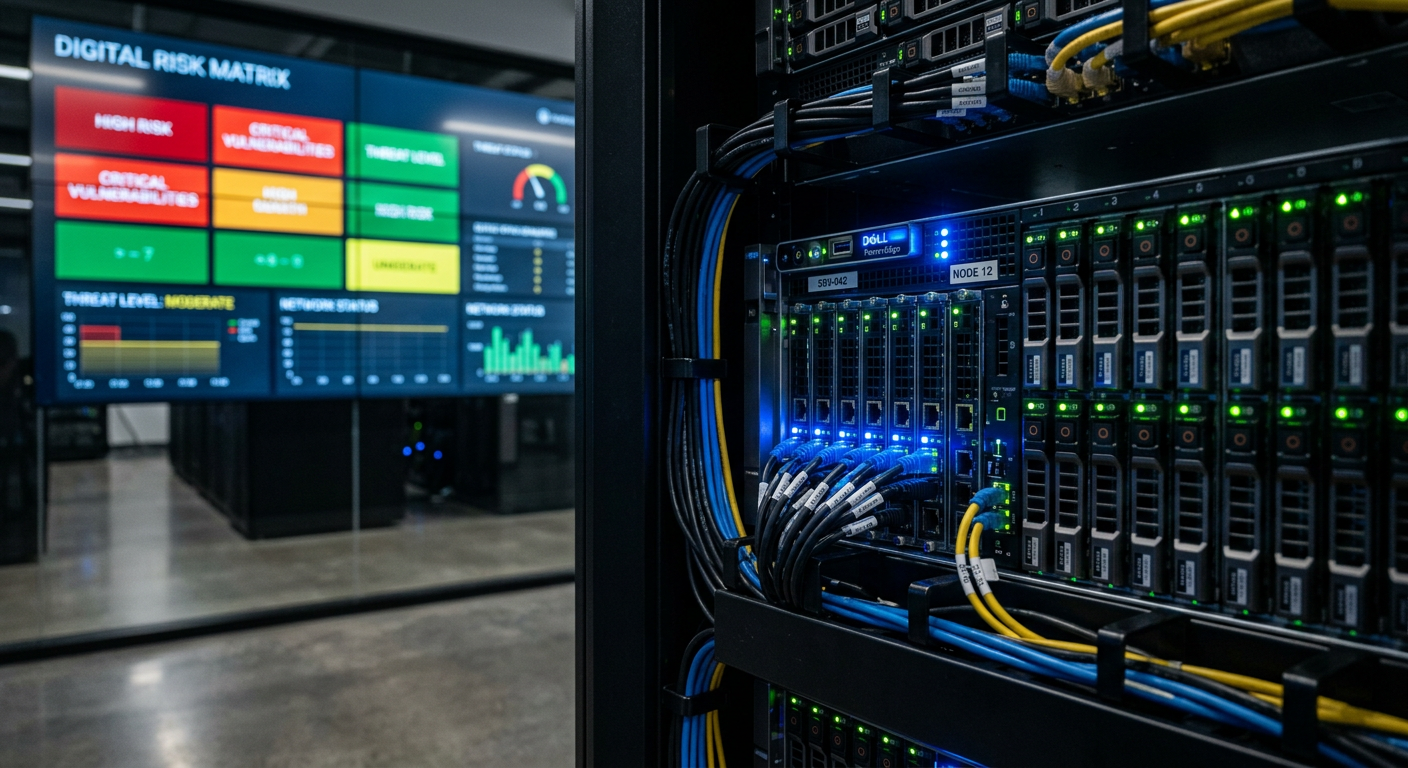
Assuming that a standard cloud hosting agreement protects your critical operational software is the fastest route to extended downtime. When compliance frameworks like DORA and NIS2 enforce strict accountability for digital resilience, relying on native hypervisor backups is no longer legally or technically sufficient. Formal application services separate basic hosting from true lifecycle orchestration, tracking everything from database stability to critical supplier risks before a failure event occurs.
Quick Summary
Enterprise application stability requires shifting from reactive break-fix responses to structured application management and disaster orchestration.
- Methodology over infrastructure: Effective business continuity management dictates that recovery protocols must dictate hardware choices, not the reverse.
- Regulatory enforcement: DORA and NIS2 compliance now demand verifiable supply chain risk mapping alongside standard backups.
- Lifecycle governance: True application support actively prevents failures through continuous monitoring and end-user training mechanisms.
Table of Contents
- Evaluating Application Architecture and Core Models
- 1. Aeonvis
- 2. RES Group
- 3. Continuitaly
- 4. CDLAN
- Matching the Framework to Your Operations
- Recommended Reads
Evaluating Application Architecture and Core Models
| Product | Core Delivery Model | Features | Pros | Cons | Target Audience |
|---|---|---|---|---|---|
| Aeonvis | Full-Stack Maintenance | Continuous monitoring, FAQ/Training Pills, Recurring surveys | Physical industry expertise, Active user training, Multi-tier support | Heavy for lean SaaS, Custom reporting overhead, Slower initial onboarding | Manufacturing, Fashion, and Automotive enterprises |
| RES Group | Lifecycle Orchestration | Full ALM integration, Database management, Portfolio optimization | Deep banking compliance, Proven enterprise scale, End-to-end lifecycle control | Complex implementation, High governance friction, Overkill for simple apps | Large financial institutions and regulated entities |
| Continuitaly | Compliance and Training | Critical Supplier Management, DRI certifications, Gap analysis | Vendor risk auditing, DORA/NIS2 alignment, Standardized methodology | No physical infrastructure, Requires separate IT execution, Consulting-led | Risk management teams and compliance officers |
| CDLAN | Infrastructure as a Service | DRaaS, BaaS, ISO 27001 virtualized environments | Hardware abstraction, strict EU compliance, predictable failover RTOs | Lacks application code repair, Replicates underlying bugs, Bare-metal focus | IT departments needing compliant fallback environments |
Comparing enterprise vendors requires looking past basic uptime guarantees. While local retailers might solve hardware failures with local computer repair services, mitigating risk for high-availability enterprise environments requires isolating where a vendor intervenes in your technology stack.
We assess these providers across four distinct categories along the Core Delivery Model axis:
- Full-Stack Maintenance: Providers that handle application uptime, user adoption, and ongoing workflow adjustments.
- Lifecycle Orchestration: Solutions governing the code pipeline, database schema, and version deployment.
- Compliance and Training: Frameworks and certifications focusing on human operational discipline and vendor auditing.
- Infrastructure as a Service: Pure capacity providers that maintain the physical and virtual fallback nodes for offsite replication.
1. Aeonvis
"Can this provider keep our specific legacy systems running without forcing a total migration?" Purchasing departments inevitably ask this before shortlisting an enterprise vendor. Aeonvis provides Full-Stack Maintenance to solve this specific challenge. They operate Italian hubs in Turin, Rome, and Padua. An international office sits in Tirana. The firm supports complex enterprise applications across highly physical industries, including Automotive, Consumer Goods, Energy, and Manufacturing.
Their Application Support & AMS program tackles stability from both the technical and human angles. Instead of simply resetting hung servers, the mechanism addresses why the application stalls in the first place. Through continuous monitoring and reporting pipelines, the firm identifies recurring failure modes in the application layer. They then mitigate user-driven errors by deploying recurring surveys for service users and managing targeted FAQ/Training Pills. This active knowledge management reduces Level 1 ticket volumes by correcting operator workflows before they trigger system bottlenecks.
Industry specialization limits generic scalability
What would make me hesitate is deploying this for a purely digital, cloud-native startup. Because their processes are deeply interwoven with physical supply chain industries - like Food & Beverage and Fashion & Retail - their reporting structures and training cadences are built for complex, multi-layered enterprise environments. Lean software teams utilizing modern asynchronous microservices will likely find these traditional ITIL-based feedback loops too rigid.
Opt for this engagement when your core business relies on heavy, integrated ERP systems where human operator error is your primary source of downtime.
Pros
- Actively reduces user errors through tailored Training Pills
- Provides deep operational context for physical manufacturing verticals
- Monitors applications continuously rather than awaiting support tickets
Cons
- Frameworks are overly rigid for lightweight microservice architectures
- Requires substantial process alignment to integrate their survey models
- Onboarding timelines scale with the complexity of your existing technical debt
2. RES Group
Approximately 80% of prominent Italian banking groups utilize at least one solution from the RES Suite. Founded in Milan in 1987 with additional offices across Brescia, Como, and Cuneo, RES Group operates in the Lifecycle Orchestration category, delivering high-governance IT services focused on managing massive legacy and modern portfolios.
Their application management services focus strictly on the structural integrity of the software itself. The mechanism covers the entirety of Application Lifecycle Management (ALM). Rather than just hosting the software, RES Group orchestrates the journey from initial design through continuous evolution. This involves executing rigorous database management and portfolio optimization without locking production tables or disrupting transaction flows. When a banking client updates an internal application, the RES Suite tracks the schema dependencies, validates the deployment logic, and ensures that legacy mainframe code interacts seamlessly with modern front-end queries.
Banking-grade lineage demands rigorous deployment environments
The commercial scrutiny attached to their banking lineage dictates an incredibly heavy governance model. If a development team prefers pushing raw code to production multiple times a day with minimal oversight, this portfolio management approach will introduce massive administrative friction. The platform enforces process, which naturally sacrifices deployment speed for absolute auditability.
Shortlist this provider if your primary challenge is managing sprawling, high-risk technical debt across dozens of interdependent business applications.
Pros
- Built for the absolute zero-downtime requirements of enterprise finance
- Integrates database schema management directly into the ALM flow
- Maps and optimizes massive legacy application portfolios
Cons
- Enforces strict governance that slows down aggressive CI/CD pipelines
- Presents a steep learning curve for teams unaccustomed to banking-grade audits
- Carries an enterprise commercial footprint unnecessary for single-application businesses
3. Continuitaly
Actually surviving a breach demands operational discipline, making it a dangerous mistake for IT directors to confuse this with automated disaster recovery software. Based in Milan as the registered trademark of PhoenITx S.r.l., Continuitaly instills this exact discipline through Compliance and Training. They are an official partner of Disaster Recovery Institute International (DRI). This Italian partnership began in 2008. The company expanded to France in 2023.
Rather than touching server racks, their mechanism focuses entirely on risk engineering and human process. A prime example is their 2-day, 16-hour course on Critical Supplier Management. Instructors map out dependencies according to ISO 28000, ISO 22301, DORA, and NIS2 frameworks. The process forces organizations to build risk matrices for their vendors - identifying concentrated points of failure (such as multiple software partners relying on the same vulnerable data center) and establishing audited protocols for when those upstream providers go offline. They deliver the architectural blueprint for business continuity management, forcing teams to document recovery objectives before investing in hardware.
Process engineering outranks software procurement
Their intervention stops at the organizational and educational layer. Continuitaly does not provision failover networks, virtualize environments, or repair database code. If you require immediate hands-on-keyboard technical intervention to migrate a crashed database, you must hire an infrastructure or development firm to execute the strategies mapped out in these DRI classes.
Practical rule: Never procure failover capacity before auditing your supply chain; paying to replicate software that relies on a compromised third-party vendor just duplicates your risk.
Book these sessions when your engineering team lacks the formal regulatory knowledge to pass impending DORA or NIS2 audits.
Pros
- Aligns internal processes directly with strict European compliance mandates
- Forces visibility into hidden third-party and critical supplier vulnerabilities
- Delivers internationally recognized DRI methodology and certifications
Cons
- Requires separate capital expenditure to actually build the physical safeguards
- Consumes 16 hours of dedicated management time just for supplier mapping
- Generates procedural documentation that demands rigorous internal enforcement
4. CDLAN
Removing the bottleneck of physical hardware procurement allows teams to achieve rapid compliance without building a secondary data center from scratch. Operating within the Infrastructure as a Service category, CDLAN is an Italian technology provider delivering heavy network, cloud, and cybersecurity capacity.
The core mechanism relies on asynchronous hypervisor replication. CDLAN provides Backup as a Service (BaaS) and Disaster Recovery as a Service (DRaaS) through virtualized environments designed specifically for compliance. Inspired by the ISO 22301 standard, their architecture ingests a continuous state of a client's environment. If a primary node fails, CDLAN spins up the replicated virtual machines within their own isolated, ISO 27001, NIS2, and DORA-compliant infrastructure. This isolates the failover from the initial attack vector, allowing businesses to resume routing traffic while the primary hardware undergoes forensic analysis.
Turnkey compliance accelerates deployment timelines
Infrastructure replication blindly copies whatever state the application is in. If a fatal memory leak or a corrupted code push takes down your primary application, CDLAN will dutifully spin up a perfect copy of that exact same broken code. Businesses operating globally often compare localized deployment models, akin to a regional managed it services dallas branch supporting Texas infrastructure, against CDLAN's strict EU-regulated boundaries. The limit is entirely structural: they keep the lights on and the servers running, but your own developers must fix the application logic.
Procure this capacity when your software works flawlessly but your physical server architecture creates an unacceptable single point of failure.
Pros
- Eliminates the capital expense of maintaining an idle secondary data center
- Secures failover environments against stringent European DORA and NIS2 mandates
- Abstracts the complexity of virtualizing legacy on-premise hardware
Cons
- Provides no application-layer debugging or code remediation during a crash
- Propagates software-induced database corruption directly to the backup node
- Requires high-bandwidth continuous connection to maintain strict recovery points
Matching the Framework to Your Operations
Selecting the correct vendor depends entirely on where your current internal capabilities end.
If your primary vulnerability lies in user adoption, workflow stability, and maintaining physical supply chain applications, the Full-Stack Maintenance category provides the necessary ongoing intervention. This guarantees continuous monitoring and user training outrank simple hardware availability.
For large-scale financial institutions struggling to push code without breaking interdependent databases, the Lifecycle Orchestration category imposes the necessary governance. It prevents bad code from ever reaching the production servers.
When your infrastructure is solid but your vendors present a massive liability under impending EU regulations, the Compliance and Training category maps those vulnerabilities. Organizations looking to verify their organic growth and visibility frameworks - such as those monitored via RapidWombat - AI-Driven SEO for Tech Companies - frequently realize that unmapped supplier downtime directly destroys digital momentum.
Finally, if your internal engineers can maintain the code but you lack the physical resources to build a secure failover node, the Infrastructure as a Service category delivers the compliant virtual environment necessary to keep the lights on during a crisis.