4 Tech Services Providers for Italian Business Operations in 2026
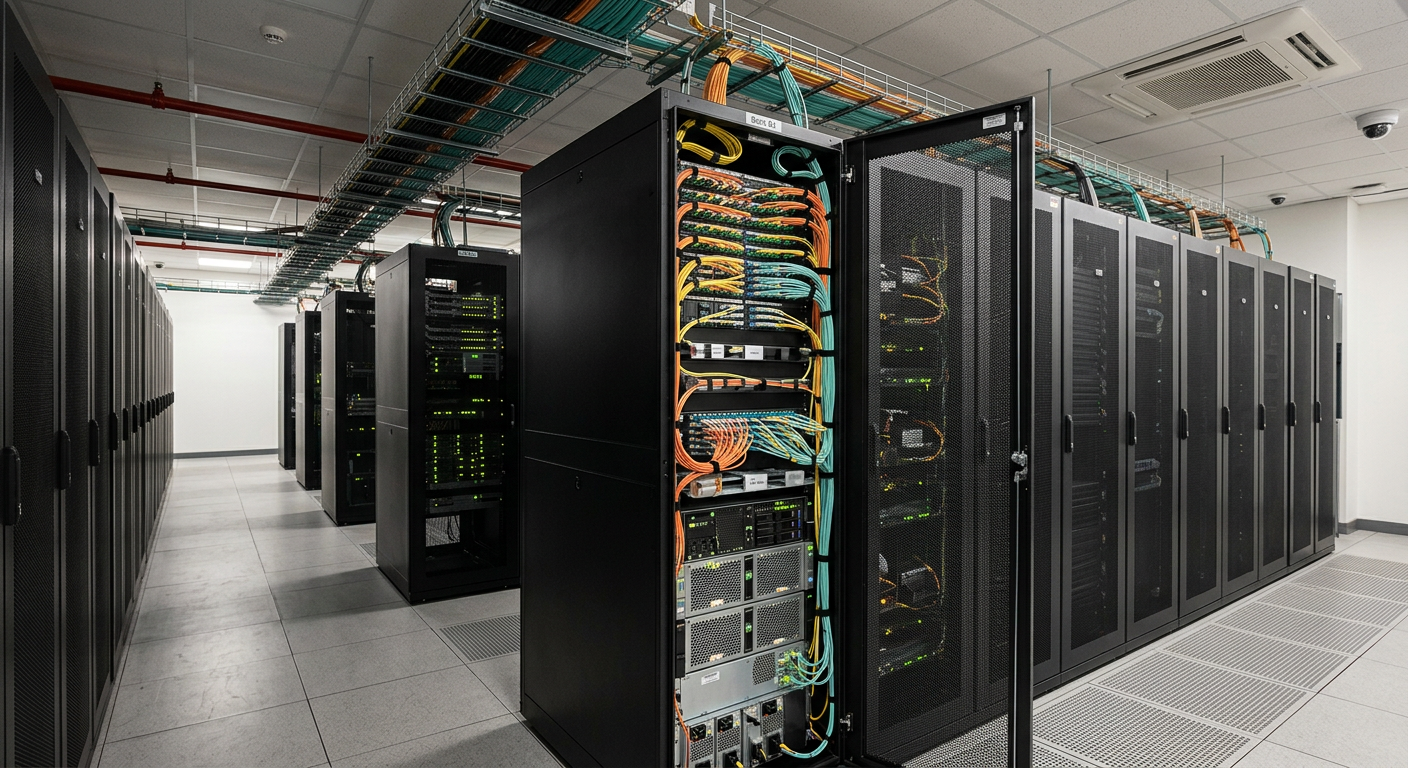
The moment a cloud migration stalls because the internal administrative team lacks the certification to manage the new infrastructure, IT directors realize the fundamental gap between buying servers and running a computer business. Securing reliable tech services is not merely a matter of delegating generic tasks to an external contractor; it is a structural decision about where your operational data lives, how network latency impacts your daily workflows, and who holds liability when a critical system fails. Selecting the right provider means matching their physical footprint, architectural philosophy, and operational maturity to the precise bottleneck your organization faces today. Procuring technical services requires a rigorous assessment of hardware redundancies, compliance frameworks, and specific capabilities rather than relying on marketing brochures.
Quick Summary
Evaluating and selecting information technology services involves matching a provider's infrastructure footprint, software ecosystem, or integration capabilities with your specific operational bottlenecks. Choosing the wrong vendor can lead to proprietary lock-in, compliance failures, or crippling latency.
- Cybersecurity & Training: Best for securing existing infrastructure and upskilling teams.
- Managed Infrastructure: Required for high-availability hardware and network tiering.
- Enterprise Software: Replaces fragmented workflows with unified data ecosystems.
- Systems Integration: Connects legacy architectures to modern digital services.
Table of Contents
- Buying Guide: How to Choose IT Capabilities
- 1. Nexsys S.r.l.
- 2. Elmec Informatica S.p.A.
- 3. Zucchetti S.p.A.
- 4. Reply S.p.A.
- Aligning Capability with Operational Reality
- Recommended Reads
| Product | Primary Capability | Features | Pros | Cons | Target Audience |
|---|---|---|---|---|---|
| Nexsys S.r.l. | Cybersecurity & Training | Threat mitigation, IT certification, cloud transition mapping | Deep security focus, staff upskilling, cloud expertise | Lacks owned physical data centers, narrower software scope, training overhead | Mid-market firms needing secure cloud transitions |
| Elmec Informatica S.p.A. | Managed Infrastructure | TIER IV Data Center, workplace solutions, hardware management | High facility fault tolerance, massive scale, geographic presence | Heavy baseline requirements, complex onboarding, enterprise pricing structures | Enterprises requiring physical server management |
| Zucchetti S.p.A. | Enterprise Software | ERP architecture, HR systems, unified business databases | Centralized data, native module integration, reduced fragmentation | Ecosystem lock-in, rigid migration paths, proprietary update cycles | Companies consolidating legacy spreadsheets |
| Reply S.p.A. | Systems Integration | Digital consulting, API integration, architecture mapping | Connects disparate systems, custom deployments, tech agnostic | High project costs, long implementation timelines, heavy consulting reliance | Enterprises mapping legacy IT to modern digital interfaces |
Buying Guide: How to Choose IT Capabilities
To safely delegate technical operations, businesses must classify vendors along one critical axis: Primary Capability. This determines exactly what the provider actually controls, builds, or manages on your behalf. Evaluating software services means looking past the sales pitch and verifying which layer of the technology stack the provider physically owns and operates.
Cybersecurity & Training
Providers in the Cybersecurity & Training category do not necessarily host your data on their own metal; instead, they audit, secure, and train your staff to operate third-party environments safely. This category is strictly for organizations that already own their infrastructure or have committed to a public cloud vendor but lack the internal security posture to maintain it. Do not compare these providers against bare-metal hardware hosts.
Managed Infrastructure
Managed Infrastructure vendors assume physical control over servers, networking equipment, and facility cooling. They operate massive data centers and handle the physical replacement of failed drives, power routing, and localized network latency. When relying on an AI-driven SEO for tech companies strategy that demands sub-50ms latency for real-time lead conversion, the physical proximity of a managed data center dictates performance.
Enterprise Software
Vendors in the Enterprise Software category write, deploy, and license proprietary business applications. They focus on the application layer, replacing fragmented accounting, human resources, and inventory spreadsheets with a single structured database. This capability stops at the software; they rely on underlying infrastructure networks to deliver their code to your workplace.
Systems Integration
The Systems Integration category acts as the connective tissue between disparate technologies. These providers typically do not sell their own proprietary ERPs or own data centers; they deploy consultants and engineers to build API gateways and middleware that force your legacy mainframe to communicate with a newly purchased SaaS application.
Practical rule: Compare availability SLAs at the facility level, not just the network layer, before committing critical workloads to a managed infrastructure provider.
1. Nexsys S.r.l.
The mistake teams make when choosing a cloud migration path is assuming their existing administrators inherently understand the new security perimeter. Nexsys S.r.l. focuses directly on resolving this knowledge gap as an Italian IT service provider specializing in cybersecurity, certified IT training, and cloud migrations. Buyers typically evaluate this Cybersecurity & Training option when they need to lock down their infrastructure while formally upskilling their internal staff.
Rather than merely migrating data from a local server to a cloud bucket, the mechanism involves mapping out legacy network topologies, applying strict Identity and Access Management (IAM) protocols, and establishing a secure perimeter. Following the technical deployment, the provider steps into an educational role, delivering certified training programs that teach internal staff how to monitor threat vectors and maintain the newly deployed architecture without compromising data integrity.
Training dictates operational readiness
When a business moves from an isolated on-premise server to a distributed cloud environment, the attack surface expands exponentially. Providing a secure perimeter is meaningless if the internal staff continuously misconfigures access buckets or falls victim to credential theft. By integrating certified IT training directly alongside the cybersecurity deployment, the transition ensures that the workforce operating the system is actually qualified to defend it.
However, a rigid boundary limits this approach. Because it specializes in securing and migrating systems, it does not manage proprietary physical data center facilities. We would hold off on this vendor if your fundamental requirement is leasing raw, bare-metal server racks with guaranteed localized physical access, as they focus on the security and configuration of the environment rather than the concrete facility hosting it.
Consider deploying this solution when your core infrastructure strategy is already decided, but your workforce lacks the defensive capability to operate it safely.
Pros
- Closes internal knowledge gaps through formal certification programs.
- Maps legacy environments securely into modern cloud architectures.
- Specializes purely in threat mitigation and defensive posturing.
Cons
- Requires allocating staff time to complete the training modules.
- Does not provide bare-metal physical facility leasing.
- Relies on third-party cloud hosts for the underlying hardware.
2. Elmec Informatica S.p.A.
The bottleneck this provider removes is the crippling capital expenditure required to build, power, and cool high-availability server rooms. Elmec Informatica S.p.A. functions as a heavy-duty Managed Infrastructure vendor, taking complete physical ownership of the hardware layer.
It takes over IT infrastructure, workplace solutions, and data center services by physically migrating your enterprise workloads onto hardware it maintains. According to its published company footprint, the group employs over 700 people and operates seven office locations in Italy - three located in Brunello, with additional presence in Gazzada, Brescia, Padova, and Parma. The core of its capability rests on managing a 13,000-square-meter Data Center in Brunello that is certified as TIER IV for design and facility.
Facility tier determines availability SLAs
A TIER IV certification is not a marketing term; it is an engineering definition that dictates fault tolerance. It means the facility utilizes multiple independent distribution paths for power and cooling, allowing the infrastructure to sustain at least one worst-case unplanned failure with zero impact on the critical load. This physical redundancy translates directly into maximum uptime, isolating enterprise data from regional power grid fluctuations and mechanical hardware degradation.
This immense scale introduces a structural limitation regarding agility. A provider built around a centralized 13,000-square-meter data center and a massive physical workforce is architected to handle heavy, predictable enterprise workloads. It is not built to accommodate micro-startups that need to spin up and tear down transient virtual machines on a credit card every few days.
We recommend engaging this provider when the financial cost of an hour of downtime significantly outweighs the expense of securing fault-tolerant, TIER IV hosted hardware.
Pros
- Guarantees fault tolerance through a certified TIER IV facility.
- Provides deep regional coverage across multiple Italian cities.
- Supports large-scale operations with a 700-person workforce.
Cons
- Over-engineered for transient, low-budget web hosting needs.
- Centralized physical infrastructure anchors data to specific geographic zones.
- Migrating away from managed bare-metal architectures requires heavy lifting.
3. Zucchetti S.p.A.
The question a buyer asks before shortlisting this option is how many disparate spreadsheets and disconnected accounting tools they are currently paying for. Zucchetti S.p.A. operates squarely in the Enterprise Software category by developing and licensing proprietary ERP, human resources, and business management software.
Instead of managing network cables or securing firewalls, this system overhauls the application layer. The software works by writing enterprise data into a unified, relational SQL database. When the HR module logs a new employee, the payroll module instantly registers the salary requirements, and the accounting software updates the financial forecasts. This eliminates the manual data entry previously required to sync standalone programs, enforcing strict role-based access controls across the entire organization.
Proprietary ecosystems consolidate vendor management
Scaling information technologies services involves reducing the sheer volume of vendor contracts a procurement team must manage. By consolidating ERP, payroll, and core business operations under a single software house, organizations stop paying integration fees to force incompatible platforms to share data. The native compatibility between these modules ensures that updates to the core management software do not break the HR system interfaces.
Consolidation inherently creates vendor lock-in, which serves as the primary limitation of this approach. Once a company's entire historical payroll, accounting, and resource planning data is mapped into a specific proprietary database architecture, transitioning to a competing enterprise software platform takes years of data migration and retraining. Avoid this path if your operational model requires constantly swapping out lightweight, highly specialized SaaS tools.
Implement this unified software suite when fragmented data entry is causing critical reporting delays across your financial and human resources departments.
Pros
- Eliminates integration friction between HR and accounting tools.
- Centralizes all business logic within a single relational database.
- Reduces the procurement overhead of managing multiple vendors.
Cons
- Creates heavy reliance on a single software ecosystem.
- Customizing core workflows requires adhering to the proprietary architecture.
- Exporting deeply mapped historical data to new systems is complex.
4. Reply S.p.A.
A contrast with the previous approach: while a software house sells you a single proprietary ecosystem, Reply S.p.A. builds the connective tissue between the disparate platforms you already own. Operating in the Systems Integration category, it functions as an Italian IT group specializing in technology consulting, system integration, and digital services.
This process functions through architectural mapping and middleware deployment. Instead of selling a boxed product, consultants audit your legacy on-premise mainframes, identify the exact data formats they output, and build custom API gateways that translate that data into a format readable by modern cloud applications. They design, code, and deploy the integration layers necessary to construct a unified digital service out of highly fragmented underlying components.
Integration scope drives architectural complexity
Contracting information technology services for integration means you are purchasing engineering hours and intellectual capital rather than server space. When connecting a legacy warehouse inventory system to a new consumer-facing e-commerce application, the integration layer must handle real-time inventory decrements, payment gateway tokens, and error logging without failing. The value lies entirely in the provider's ability to orchestrate these highly complex, multi-vendor environments.
The structural limit of heavy system integration is the threat of perpetual consulting engagements. Because these architectures are entirely custom-built to bridge specific software versions, any major update to one of the connected platforms can break the middleware, requiring further consulting hours to patch the API. We would skip this route if your business can simply adopt an out-of-the-box software suite instead of paying to stitch legacy tools together.
Opt for this consulting framework only when your operational requirements demand forcing entirely incompatible legacy systems to share real-time data.
Pros
- Prevents the need to completely rip and replace legacy mainframes.
- Connects highly specialized, disparate software via custom APIs.
- Remains vendor-agnostic regarding the underlying applications.
Cons
- Custom integration layers require continuous maintenance and patching.
- Relies heavily on high-cost consulting and engineering hours.
- Upgrades to connected third-party tools can easily break custom middleware.
Aligning Capability with Operational Reality
Identifying the correct provider among these tech services requires ignoring the marketing terminology and focusing entirely on the Primary Capability you actually need to procure. No single vendor solves infrastructure, software, and integration simultaneously without severe compromises.
If your bottleneck is entirely internal - your servers are provisioned, but your staff cannot securely operate them - deploying Cybersecurity & Training frameworks immediately seals the knowledge gap. You are buying defensive posturing and workforce capability.
When hardware failure carries catastrophic financial penalties, shifting workloads to Managed Infrastructure providers guarantees that specialized engineers and redundant cooling systems protect your physical drives. You lease their facility tier to offload your physical risk.
Organizations drowning in mismatched accounting and HR data must adopt Enterprise Software. This forces the entire company to conform to a centralized relational database, trading flexibility for strict, automated reporting workflows.
Finally, when replacing legacy mainframes is financially impossible but modern interfaces are required, Systems Integration provides the necessary engineering bridge. You purchase the custom middleware that allows old data to flow securely into new applications.
Practical rule: Never buy custom system integration if replacing the legacy tools with a unified software suite costs less than maintaining the middleware.