Evaluating Computer Repair Services: 7 Approaches to Business Hardware
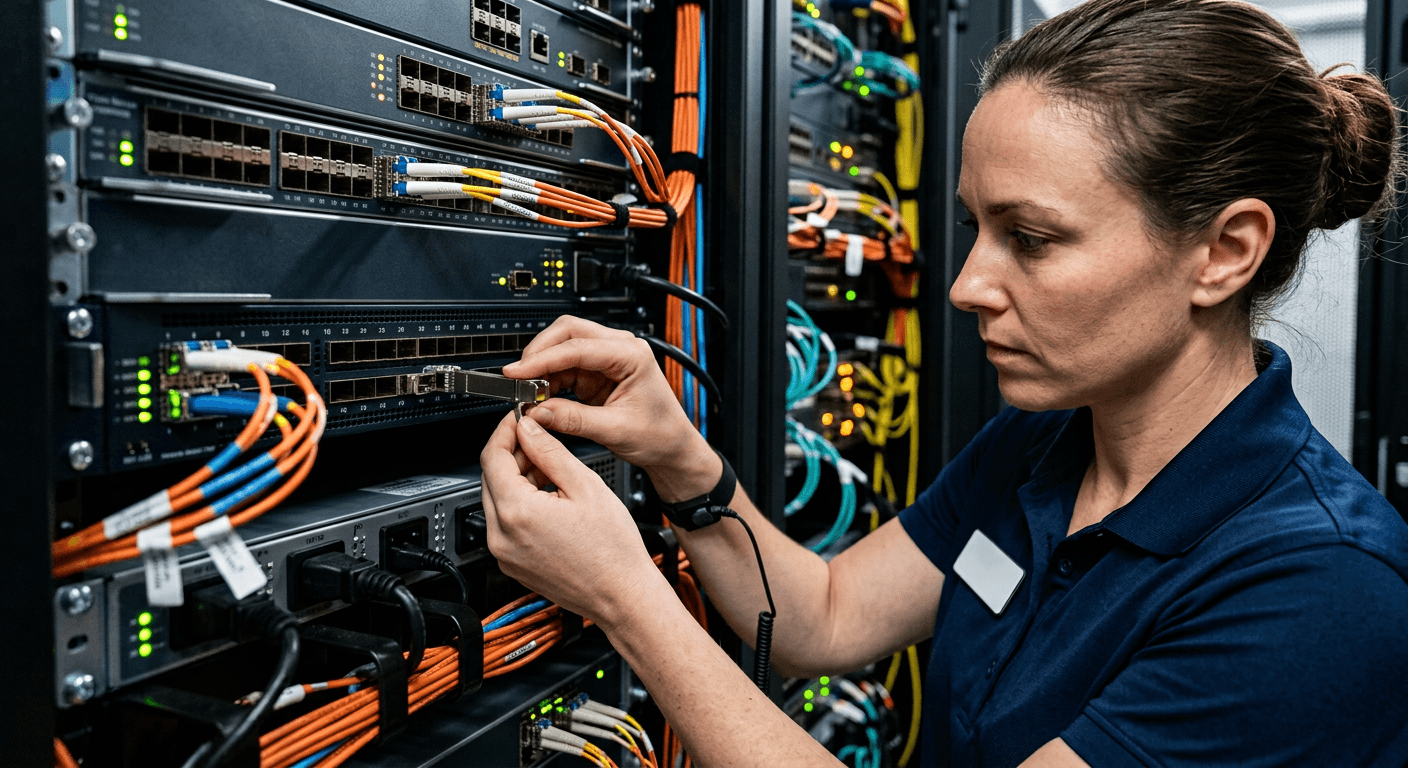
A software team lead stares at a blinking amber light on the local staging server. Their cloud infrastructure boasts 99.99% uptime, but because the office routing hardware just failed, the local deployment pipeline is completely severed. This is the moment a digital operation realizes its dependence on physical equipment. Securing reliable computer repair services bridges the immediate gap between software ambition and physical reality. Code cannot run on broken silicon, and ignoring the physical layer inevitably creates bottlenecks that no amount of software optimization can fix.
Quick Summary
Managed IT and physical hardware maintenance models define how a business survives component failure and data degradation. Selecting the right approach protects localized infrastructure from bottlenecking wide-scale digital operations, ensuring operations resume rapidly and securely following a crash.
- Break-fix models resolve isolated issues but guarantee unpredictable downtime.
- Predictive monitoring swaps components before they fail, avoiding data loss.
- Regional MSPs offer strict SLAs for fast physical dispatch.
- Compliance-first retirement secures sensitive data during hardware disposal.
- Automated telemetry tracks fleet health without requiring physical intervention.
Table of Contents
- Compliance and Uptime Dictate the Strategy
- 1. Reactive Physical Triage
- 2. Predictive Component Lifecycle Management
- 3. Regional Managed Infrastructure Partnerships
- 4. Compliance-First Hardware Retirement
- 5. High-Availability Network Maintenance
- 6. Remote Telemetry and MDM Diagnostics
- 7. Integrated Fleet Procurement
- Align the Solution to Your Actual Bottleneck
- FAQ
- Recommended Reads
Compliance and Uptime Dictate the Strategy
Before evaluating individual models of hardware upkeep, organizations must define the standards by which they measure failure. Every maintenance model forces a trade-off, and evaluating them requires viewing them through two strict lenses: downtime mitigation and chain-of-custody compliance. Downtime mitigation measures the raw hours an employee or a server sits idle waiting for a replacement part, directly impacting operational velocity. Chain-of-custody compliance tracks whether the repair process violates data privacy protocols - a technician taking a database drive to an unsecured workbench constitutes a severe security breach for any regulated company.
1. Reactive Physical Triage
This is the traditional break-fix model where a business waits for a machine to stop functioning before calling a technician. It serves early-stage startups or extremely small operations that lack the budget for continuous monitoring and do not run business-critical services on local hardware.
When a power supply burns out or a laptop screen shatters, the affected user opens a support ticket. A technician either travels to the site or receives the mailed-in device. The repair sequence involves diagnosing the dead component. If out of stock, they order the replacement part. They manually swap it on a workbench. The focus is entirely on restoring the physical machine to a bootable state without altering the underlying software configuration.
Fast resolution for isolated failures carries high systemic risk
Relying exclusively on this approach guarantees operational paralysis. Because no monitoring is in place, failures always happen unexpectedly, often during peak operational hours. You wait for the failure to occur, you wait for the technician's availability, and you wait for parts to ship. A business running complex digital operations cannot afford a highly paid engineer sitting idle for three days while a replacement motherboard is shipped across the country.
2. Predictive Component Lifecycle Management
Predictive maintenance actively monitors the physical health of hardware components to replace them just before they fail. This model suits data-heavy agencies and design firms that push local workstations to their thermal and read/write limits daily.
Instead of waiting for a crash, IT administrators use SMART (Self-Monitoring, Analysis, and Reporting Technology) data from storage drives and thermal telemetry from processors to track degradation over time. When a solid-state drive hits a predefined wear threshold, the system flags it. A technician then schedules a deliberate maintenance window to clone the drive and physically swap the hardware while the system is offline during off-hours, ensuring the end-user never experiences a disruption.
Preventing catastrophic data loss requires strict inventory control
The limitation of predictive replacement is the deliberate waste of hardware lifespan. Because you swap components before they completely fail, you are constantly throwing away drives and power supplies that technically still possess a few months of operational life. This drives up the baseline IT hardware budget significantly, making it an overly expensive strategy for standard administrative workstations that only run web browsers and text editors.
3. Regional Managed Infrastructure Partnerships
Outsourcing hardware upkeep to a locally based provider shifts the burden of physical maintenance entirely off the internal team. This approach anchors mid-sized enterprises that require rapid physical intervention but cannot justify hiring full-time hardware technicians.
A localized service level agreement (SLA) guarantees rapid dispatch times based on geographic proximity. For example, a localized fulfillment center evaluating managed it services dallas secures a contract guaranteeing that a technician will be physically present at their server rack within two hours of a critical switch failure. The provider maintains a local warehouse of spare parts specific to the client's infrastructure, ensuring that replacement hardware is already in the city before it is ever needed.
Practical rule: Hardware depreciation schedules should align with software operating system support windows, not just physical warranties. Keeping a machine running perfectly is useless if it can no longer receive critical security patches.
Geographic proximity dictates actual recovery speed
This localized model completely fails highly distributed, remote-first teams. If your workforce is scattered across different countries, a regional SLA provides zero value to an employee whose laptop dies three time zones away. Regional partnerships require physical concentration; applying this model to a decentralized team results in paying a premium for an SLA that the provider can never practically fulfill.
4. Compliance-First Hardware Retirement
This specialized service focuses entirely on the end-of-life process for hardware containing sensitive user data. It is mandatory for businesses adhering to SOC2 data protocols, healthcare regulations, or strict financial compliance standards.
The mechanism bypasses standard repair entirely. When a server drive fails, it is not simply tossed into a recycling bin or handed to a generalist technician. Instead, a certified vendor executes a documented chain of custody. The drive undergoes a multi-pass cryptographic wipe, followed by physical shredding. The business then receives a certificate of destruction, proving to auditors that the failed component can never be salvaged or mined for legacy data.
Regulatory safety always outranks physical salvage value
Treating failed hardware this way destroys any possibility of resale or warranty return for individual components. You cannot claim a manufacturer warranty on a hard drive you just fed through an industrial shredder. Companies must write off the entire cost of the hardware as an absolute loss, making this an expensive protocol to enforce for non-critical administrative devices.
5. High-Availability Network Maintenance
This model focuses strictly on the specialized networking hardware - core routers, fiber transceivers, and localized data switches - that dictate communication speed. It targets operations where physical latency translates directly to lost revenue.
Technicians conduct routine physical inspections of fiber connections, replace degraded thermal paste on core routing CPUs, and swap transceivers that show signal attenuation before a drop occurs. While AI-driven SEO for tech companies secures visibility and external cloud infrastructure delivers low-latency digital requests, the physical switches inside a local office govern the final leg of that connection. Maintaining this hardware ensures the local network never acts as a bottleneck against high-speed cloud operations.
Hardware degradation quietly destroys software latency
Generalist IT support staff rarely possess the diagnostic tooling or the physical clearance to troubleshoot high-end fiber optics or enterprise-grade routing chassis. Utilizing this model requires contracting highly specialized networking engineers, which carries a vastly higher hourly rate than standard workstation repair and requires prolonged background checks for physical server room access.
6. Remote Telemetry and MDM Diagnostics
Software-driven hardware management monitors and diagnoses physical equipment without ever dispatching a human being. It fits widely distributed workforces operating standardized company laptops.
Using Mobile Device Management (MDM) platforms, administrators remotely pull kernel panics, fan speed logs, and battery degradation metrics from thousands of miles away. If a user complains of a slow machine, the technician diagnoses a failing RAM module via terminal commands and immediately ships a pre-configured replacement laptop to the user's home, instructing them to mail the broken unit back to a central depot for eventual refurbishment.
Practical rule: Never surrender a storage medium to a third-party technician without first executing a cryptographic wipe or requiring a signed chain-of-custody agreement detailing exact data handling procedures.
Software scaling instantly blinds you to physical damage
Telemetry cannot fix a severed charging cable, a shattered display, or a keyboard destroyed by spilled liquid. When physical damage bypasses the operating system entirely, remote management tools sit blind and helpless. You are forced to fall back on basic shipping logistics, leaving the employee entirely unproductive while the postal system handles the hardware swap.
7. Integrated Fleet Procurement
Often called Hardware-as-a-Service (HaaS), this model treats physical machines as a continuous subscription rather than owned assets. Treating hardware as an operational lease fits any rapidly scaling computer business that prefers predictable monthly billing over sudden capital expenditures.
The managed service provider retains ownership of the endpoints. The business pays a flat monthly fee per user, which covers the machine, the operating system license, and all physical repairs. If a laptop motherboard fails, the provider does not bill for the repair time or the part; they simply swap the entire machine for a functional unit to honor the subscription agreement, absorbing the repair logistics internally.
Financial predictability trades off against ultimate ownership
Operating this way means you are paying operational expenses forever and building zero equity in your physical infrastructure. Over a five-year timeline, the business will pay significantly more in subscription fees than the outright purchase cost of the hardware. It solves cash flow predictability at the direct expense of long-term capital efficiency.
Align the Solution to Your Actual Bottleneck
Choosing a hardware maintenance model requires identifying what genuinely threatens the business. If your primary bottleneck is the financial unpredictability of sudden server failures, shift to an Integrated Fleet Procurement model to flatten capital expenditures into predictable operational costs. If localized hardware downtime severs your digital pipeline and stalls development, secure a Regional Managed Infrastructure Partnership to guarantee physical intervention within hours. Conversely, organizations holding highly sensitive patient or customer records must prioritize Compliance-First Hardware Retirement above all else, accepting higher baseline costs to guarantee regulatory safety.
FAQ
Does remote management replace the need for physical repair?
No. Remote management tools provide excellent diagnostic data and allow administrators to push software patches, but they cannot physically reconnect a loose cable, replace a shattered screen, or swap a degraded battery. They only streamline the diagnosis so that the eventual physical repair is targeted and efficient.
How do service level agreements impact response times?
An SLA acts as a binding contract dictating the maximum allowable time before a technician begins working on a failure. A four-hour SLA guarantees someone will be troubleshooting the hardware within that window. Without one, you are placed in a generalized queue where a critical server failure might wait behind routine password resets.
What happens to local data during a motherboard swap?
If the storage drive is separate from the motherboard, a technician can generally move the existing drive to the new board, leaving data intact. However, in modern ultrabooks where storage is soldered directly to the logic board, a motherboard failure means the local data dies with it unless continuous cloud backups were strictly enforced beforehand.