Choosing Managed IT Services Dallas vs On-Demand Repair for Business Hardware
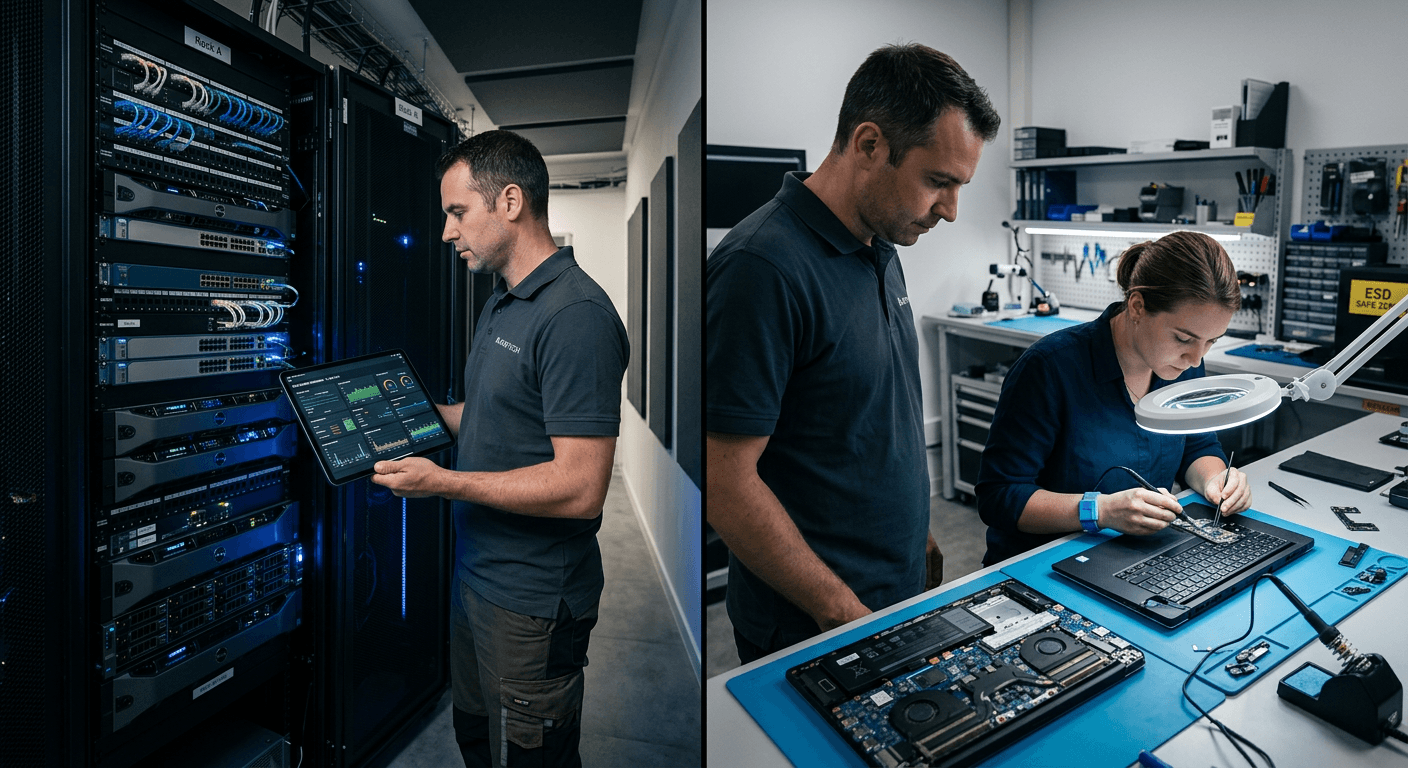
Maintaining high-performing technical hardware is a fundamental challenge for any growing business, as downtime directly correlates to lost revenue and reduced operational efficiency. Organizations must choose between comprehensive managed IT services Dallas based providers and ad-hoc computer repair services to ensure their digital infrastructure remains resilient. Understanding the core differences between these two models allows business owners to align their IT strategy with their long-term growth objectives and budget constraints.
Quick Summary
Managed IT services represent a proactive, subscription-based approach to technology management, while on-demand computer repair services focus on reactive troubleshooting for specific hardware failures. Choosing between them depends on whether your organization prioritizes continuous uptime or prefers to handle maintenance tasks internally until a critical issue arises.
- Managed IT offers 24/7 monitoring and preventive maintenance.
- Computer repair services are ideal for occasional, project-specific hardware fixes.
- Scalability is inherent in managed services but limited in break-fix models.
- Cost predictability favors managed models over unpredictable emergency repair bills.
Table of Contents
- Comparison Table
- Managed IT Services vs Computer Repair Services
- Proactive Managed IT Support
- Reactive Computer Repair Services
- Principles of Services Engineering for Hardware
- Strategic SDM Services Integration
- How to Choose the Right Support Model
- FAQ
- Recommended Reads
Comparison Table
| Feature | Managed IT Services | Computer Repair Services | SDM Services |
|---|---|---|---|
| Engagement | Subscription (Monthly) | Per Incident (Hourly) | Contract-Based |
| Approach | Proactive / Preventive | Reactive / Repair | Lifecycle Focused |
| Cost | Predictable/Fixed | Fluctuating | Scalable |
| Scope | Comprehensive/Systemic | Targeted/Specific | Infrastructure |
| Ideal For | Growing Enterprises | Small Startups | Complex Deployments |
Managed IT Services vs Computer Repair Services
The distinction between these categories lies primarily in the relationship between the provider and the business infrastructure. Managed service providers (MSPs) operate as an extension of a company's internal operations, managing everything from network security to hardware health. This requires a comprehensive review of platform security to ensure that sensitive data remains protected while the provider manages the hardware stack.
Conversely, traditional computer repair services are transaction-based. When a server fails or a workstation stops functioning, the technician is dispatched to resolve that specific problem. While this model can be cost-effective for micro-businesses with minimal technical requirements, it leaves the organization vulnerable to recurring issues and lack of standardized operational compliance regarding hardware maintenance and security patching.
Proactive Managed IT Support
Managed IT services focus on preventing failure rather than fixing it. By utilizing remote monitoring and management (RMM) tools, these services track disk health, CPU temperatures, and memory usage in real-time. If a potential failure is identified, the service provider addresses it before it results in a system outage.
Benefits of Managed IT
- Consistent uptime achieved through constant remote monitoring.
- Predictable monthly expenses allow for accurate budgeting.
- Access to a broader team of experts rather than a single technician.
Drawbacks of Managed IT
- Higher monthly recurring costs compared to zero activity months.
- Requires long-term commitment to a single service provider.
Reactive Computer Repair Services
Computer repair services are the go-to solution for businesses that prefer to manage their own environment but lack a dedicated hardware team. This "break-fix" model is beneficial for companies with very simple, non-critical infrastructures where the cost of a managed contract outweighs the potential impact of an occasional hardware issue.
Benefits of Repair Services
- Pay-as-you-go pricing model is ideal for tight cash flows.
- No long-term contracts or subscription lock-ins.
- Quick solution for simple, isolated hardware failures.
Drawbacks of Repair Services
- No proactive protection against security threats or systemic failures.
- Unexpected emergency service fees can be prohibitively expensive.
- Inconsistent performance due to the lack of a standardized maintenance schedule.
Principles of Services Engineering for Hardware
Services engineering involves designing, deploying, and managing complex technical environments to ensure they deliver specific business outcomes. Unlike simple repair, this discipline looks at the hardware lifecycle from procurement to disposal. Businesses that apply these principles ensure that their server and workstation refresh cycles are optimized to reduce energy costs and minimize performance degradation.
Properly engineered service environments prioritize scalability. As a business expands, the hardware must grow alongside it without requiring a complete overhaul of the existing architecture. By focusing on modular components and standardized deployment procedures, businesses can leverage integrated growth platforms to manage their expansion without suffering from technical debt or compatibility issues.
Strategic SDM Services Integration
Service Delivery Management (SDM) services serve as the bridge between technical execution and business goals. An SDM provider acts as a strategic advisor, ensuring that the hardware performance directly supports the company’s key performance indicators. This approach is highly effective for organizations that have outgrown basic repair services but are not yet ready for a full internal IT department.
SDM services focus on long-term health metrics rather than just fixing broken parts. They provide reports on hardware reliability, software licensing compliance, and security posture. This level of oversight ensures that technical investments are justified and that the business remains agile in a competitive market environment.
How to Choose the Right Support Model
Choosing the right model requires an honest audit of your current hardware footprint and your risk tolerance. If your business depends on 99.9% uptime to process sales or handle client data, the cost of an outage is likely far higher than the cost of a managed service subscription. In such cases, proactive management is a necessary insurance policy.
For businesses where a few hours of downtime represent a minor inconvenience rather than a fiscal disaster, an on-demand repair model may be sufficient. However, always ensure that your backup solutions are robust, regardless of which support model you choose. A repair service can fix a failed drive, but they cannot restore data that was never backed up in the first place.
FAQ
- What is the main difference between managed services and repair? Managed services focus on proactive, ongoing monitoring and maintenance, while repair services focus on reactive, one-time fixes for specific issues.
- Is it cheaper to use a local repair shop or an MSP? Repair shops have lower entry costs, but MSPs are often more cost-effective for businesses needing consistent uptime due to their ability to prevent expensive emergencies.
- What does SDM stand for in IT? SDM stands for Service Delivery Management, which focuses on aligning IT services with business goals through strategic planning and performance tracking.