Google Deepmind and the Latest Innovations in Artificial Intelligence
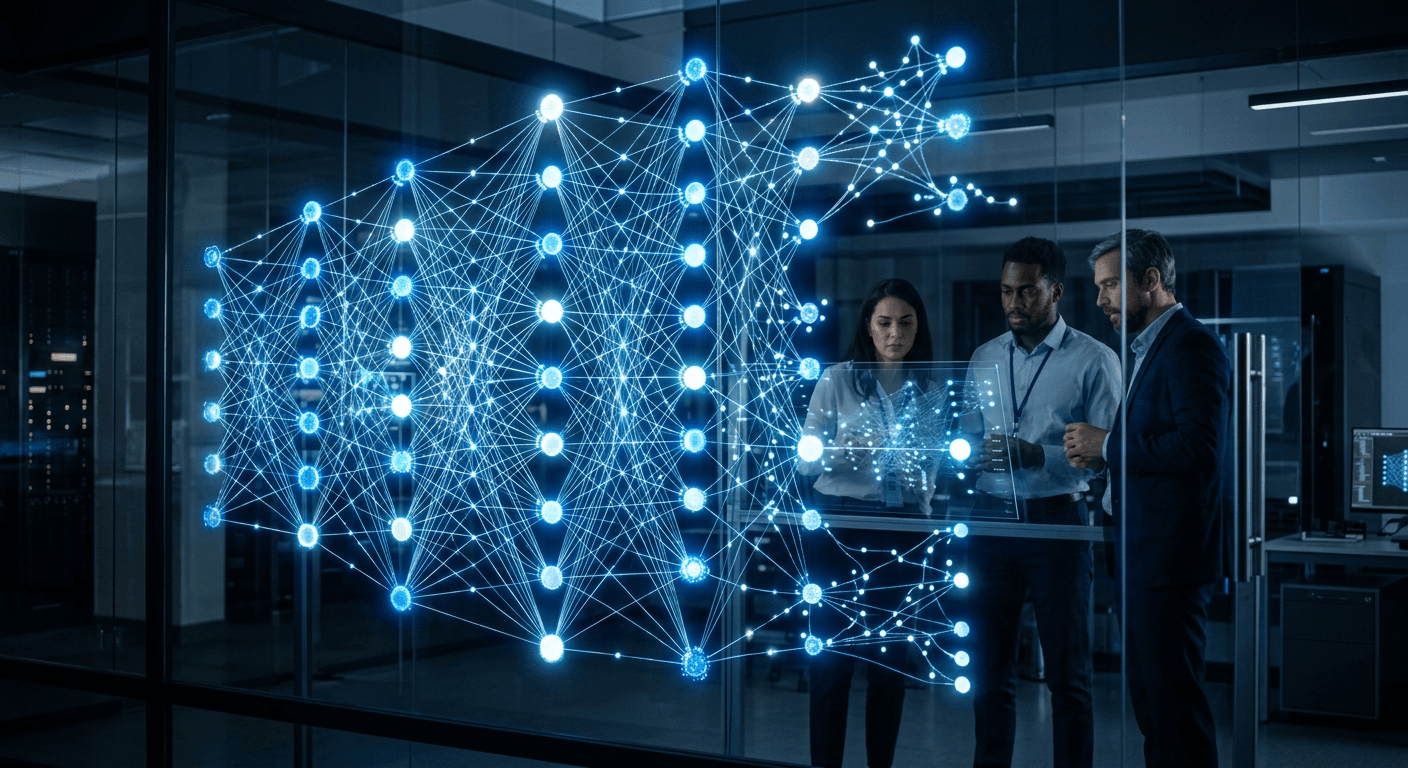
The landscape of machine learning is being fundamentally reshaped by the research output of Google Deepmind, an entity that consistently pushes the boundaries of computational intelligence. By integrating advanced neural architectures with massive datasets, the organization has transitioned from solving specific game-theoretic problems to developing general-purpose systems that influence everything from molecular biology to creative media generation. Understanding these innovations requires looking beyond consumer-facing interfaces and examining the underlying research paradigms that prioritize scale, multimodal reasoning, and efficiency.
Quick Summary
Google Deepmind represents the pinnacle of modern artificial intelligence research, focusing on transformative breakthroughs in neural network architecture, reinforcement learning, and generative modeling to solve complex global challenges. Their work bridges the gap between theoretical computer science and practical, large-scale deployment of adaptive, autonomous systems.
- Advanced reinforcement learning techniques facilitate mastery of complex, multi-step tasks.
- Multimodal models unify text, image, and spatial reasoning into cohesive processing engines.
- Algorithmic efficiency is prioritized to reduce the massive computational overhead typical of large models.
- Scientific discovery applications, such as protein folding, showcase AI utility beyond standard enterprise software.
Table of Contents
- Quick Summary
- The Foundational Impact of Deepmind Research
- Multimodal Intelligence and Image Generation
- Advancements in Large Language Models
- Reinforcement Learning and Agentic Systems
- Computational Efficiency and Hardware Synergy
- Comparative Analysis of AI Capabilities
- Real World Implementation and Insights
- Frequently Asked Questions
- Recommended Reads

The Foundational Impact of Deepmind Research
Google Deepmind operates on the premise that intelligence is a property of systems capable of learning from environment interactions rather than static training sets. By applying reinforcement learning to high-dimensional spaces, the group has successfully moved AI from narrow, domain-specific tools toward versatile agents. Their historical shift from game-based benchmarks to practical, real-world utility serves as the blueprint for current industry standards in model training.
This evolution necessitates a departure from simple predictive modeling. Instead, the focus has shifted toward building architectures that can reason through multi-step logic. By visiting the official terms of service for these platforms, developers can better understand how these foundational models govern the ethical use of machine learning. The long-term objective is the creation of 'General Intelligence' systems that possess the adaptability of the human brain while retaining the consistency and speed of digital computation.
Multimodal Intelligence and Image Generation
Recent breakthroughs in google ai image generation and recognition have centered on latent diffusion models that synthesize visual data with unprecedented semantic coherence. Unlike early generative adversarial networks (GANs) that struggled with complex compositions, modern architectures utilize transformer-based encoders to understand the nuanced relationship between linguistic prompts and pixel-level outputs. This allows for the generation of high-fidelity imagery that respects complex spatial constraints and stylistic requirements.
Multimodal models are not limited to image synthesis; they integrate textual context with visual understanding, allowing systems to 'see' and 'describe' environments in real time. This capability is critical for robotics and autonomous navigation where the AI must translate visual input into actionable logical commands. The ability to parse a scene and generate an accurate visual or textual summary represents a significant leap over previous generation architectures that treated image and text as mutually exclusive data modalities.
Advancements in Large Language Models
Language remains the primary interface for human-AI interaction, and the development of large language models (LLMs) has been marked by significant architectural refinement. Google’s approach to these models involves fine-tuning on diverse, high-quality data pipelines, ensuring that the model maintains coherence over long-form generation. These systems utilize advanced attention mechanisms that allow the model to weight the significance of specific tokens relative to the entire document context.
Pro Tip: When utilizing high-end AI assistants, focus on providing contextual 'personas' or specific role-based instructions within your prompts to significantly reduce model hallucination and sharpen output relevance.
Modern research into these models also explores the concept of 'in-context learning,' where an AI improves its performance through the few-shot examples provided in the prompt rather than requiring weight updates via backpropagation. This makes deployment significantly more agile for end-users who need specialized outputs without the immense cost of retraining or fine-tuning from scratch.
Reinforcement Learning and Agentic Systems
Reinforcement learning (RL) is the backbone of autonomous decision-making. By creating environments where agents receive rewards for optimal behaviors, researchers at Deepmind have developed systems that can navigate complex strategy games and, more importantly, manage logistical supply chains or cooling systems in data centers. These agents do not simply follow pre-written scripts; they learn the rules of the environment and optimize their strategies over time.
Applying RL in professional settings allows for the creation of 'agentic' workflows. These agents can manage complex, multi-stage project goals, delegating tasks between various sub-models to achieve a desired outcome. This shift from 'chatting' to 'executing' marks a major milestone in the commercial viability of AI, as organizations increasingly seek tools that can bridge the gap between planning and implementation.
Computational Efficiency and Hardware Synergy
As model parameters reach the trillion-scale, the bottleneck is no longer data availability but computational cost. Google Deepmind works closely with hardware division teams to optimize the flow of tensors through custom processing units. By developing specialized kernels that execute matrix multiplications more efficiently, they ensure that high-performance models remain sustainable in terms of both energy consumption and latency.
This hardware synergy also enables 'distillation,' a process where a large, 'teacher' model teaches a smaller, more compact 'student' model how to behave. This allows for the integration of powerful AI capabilities onto edge devices like mobile phones, where local processing is preferred for privacy reasons. Users concerned about data handling should consult the site's privacy policy to learn how these efficient models protect personal information during local inference.
Comparative Analysis of AI Capabilities
| Capability | Generative AI Models | Reinforcement Learning Agents | Multimodal Systems |
|---|---|---|---|
| Primary Use | Text/Content Creation | Decision Making/Logistics | Vision/Environment Mapping |
| Data Input | Massive Text Corpora | Simulated/Real Environments | Mixed Media/Sensors |
| Strengths | Creativity/Natural Language | Strategy/Efficiency | Contextual Awareness |
| Complexity | High (Architecture) | High (Environment Setup) | Very High (Synthesis) |
Real World Implementation and Insights
Integrating these AI tools into enterprise workflows requires a focus on 'human-in-the-loop' systems. While the technical capabilities of these models are immense, they function best when used as co-pilots. Real-world insights suggest that teams experience the highest ROI when AI is used to handle repetitive data synthesis, allowing human experts to focus on the edge cases and final verification that require subjective, high-level judgment.
For businesses, the transition toward AI integration is not a matter of replacing existing systems, but rather augmenting them with predictive layers. Whether using a professional portal for resource management or implementing custom agent frameworks, the key to success is modularity. By keeping the AI components as replaceable, interoperable blocks, organizations can avoid vendor lock-in and iterate as the underlying technology advances.
Frequently Asked Questions
How do these models differ from standard predictive software?
Standard software follows explicit hard-coded rules, whereas Deepmind-influenced models learn probabilistic patterns from data, allowing them to generalize to situations they have not encountered before.
Can these models be run on local infrastructure?
Many modern architectures support quantization, which shrinks the model size to fit on local hardware without losing significant accuracy, provided you have access to sufficient specialized silicon.
What are the ethical considerations regarding AI-generated media?
Google prioritizes safety filters and digital watermarking to differentiate synthetic media from reality, aiming to mitigate misinformation risks while fostering creative expression.
How does reinforcement learning help in practical business settings?
It allows for the optimization of dynamic variables, such as energy usage in buildings or traffic flow management, by constantly testing and refining strategies against real-world feedback loops.