Mastering Google Project Management with AI Integration and Workspace Tools
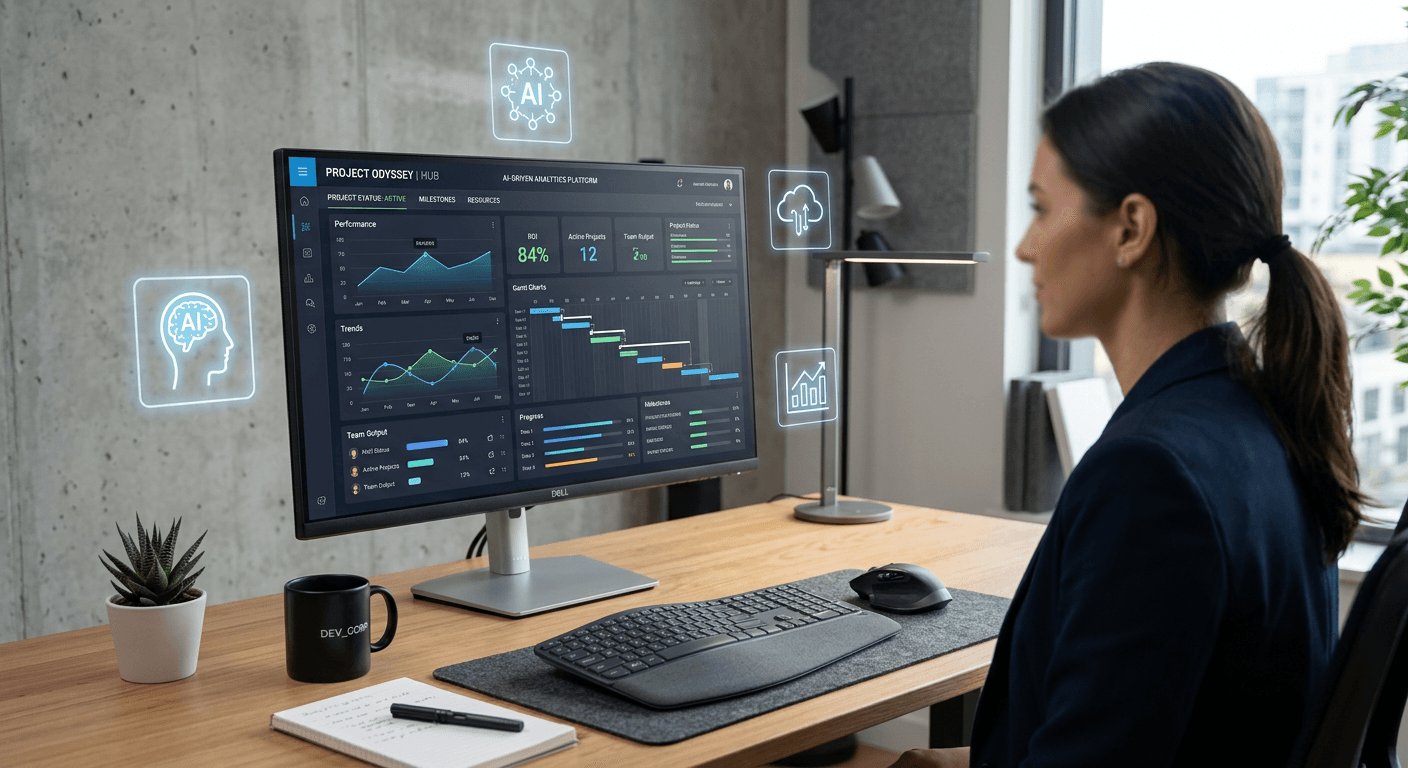
Modern project management requires a unified approach to data, collaboration, and intelligent automation. By leveraging the ecosystem of professional productivity software, organizations can streamline workflows and reduce the cognitive load on team members. Implementing effective google project management strategies involves more than just task tracking; it requires a deep integration of real-time communication, automated documentation, and predictive data analysis to maintain project velocity.

Quick Summary
Google project management leverages a suite of integrated cloud tools to automate task tracking, facilitate real-time collaboration, and deploy artificial intelligence for content generation and data visualization. By connecting workspaces with automated triggers and predictive search intelligence, teams can achieve higher operational transparency and more efficient resource allocation across complex enterprise projects.
- Use AI-driven slides for automated reporting and progress visualization.
- Leverage integrated cloud search to synthesize data across disparate project documents.
- Implement automated workflow triggers to maintain consistency and uptime across project lifecycles.
Table of Contents
- Quick Summary
- Leveraging Google Search AI for Project Intelligence
- Automating Presentations with Google Slides AI
- Integrating Google Internet of Things Data into Project Dashboards
- Common Pitfalls & Troubleshooting
- FAQ
- Recommended Reads
Leveraging Google Search AI for Project Intelligence
Effective project management relies on the ability to extract relevant insights from vast archives of internal data. Search AI capabilities within the workspace allow managers to query specific project parameters across email threads, drive documents, and archived chat logs. This functionality eliminates the time-consuming process of manual file retrieval, ensuring that decision-makers have immediate access to contextually relevant information during critical project phases.
To maximize this utility, establish a standardized taxonomy for file naming and document tagging within your organization. When the search engine understands the metadata context, the results returned are significantly more precise. Practitioners should also ensure that privacy protocols are strictly configured, allowing the search AI to index only the necessary project repositories while keeping sensitive or restricted intellectual property secure from unauthorized discovery.
Automating Presentations with Google Slides AI
Reporting project status is often a repetitive task that distracts from high-level strategic execution. By utilizing Google Slides AI features, project managers can automate the creation of slide decks based on data sets from Sheets or project management documentation. These tools can identify key performance indicators (KPIs) and visualize them into coherent charts and summaries without requiring manual intervention for layout or formatting.
Pro Tip: Focus your source data in a clean, tabular format before initiating AI-driven presentation generation. The cleaner the source data, the more accurate the AI will be in selecting the appropriate visual representation, such as a trend line versus a bar graph.
Beyond simple formatting, AI assistance enables the quick synthesis of meeting minutes into actionable slide content. This creates a feedback loop where the meeting outcomes are immediately converted into visual updates for stakeholders, ensuring everyone remains aligned on project milestones without delays in communication.
Integrating Google Internet of Things Data into Project Dashboards
For technical and infrastructure projects, incorporating data streams from the Google Internet of Things (IoT) ecosystem provides real-time visibility into project environments. By channeling sensor data or API telemetry into centralized project management dashboards, teams can monitor hardware performance, site security, or environmental conditions remotely. This level of oversight is essential for projects involving hardware deployment or distributed infrastructure where physical monitoring is not feasible.
Data ingestion should be managed via secure cloud pipelines, ensuring that the latency between an IoT event and the dashboard update remains minimal. Integrating these streams requires careful configuration of access control lists to comply with established operational terms. By treating physical asset telemetry as a primary project metric, managers can proactively identify bottlenecks or potential failures before they manifest as critical project delays, thereby enhancing overall service reliability.
Common Pitfalls & Troubleshooting
One common error in project management is over-reliance on automated tools without human oversight. AI-generated summaries may occasionally hallucinate or misinterpret project data if the source documents are poorly formatted or contain conflicting information. Always conduct a final review of AI-synthesized documents before distributing them to executive stakeholders.
Additionally, connectivity issues or sync errors between integrated tools can lead to stale data. Ensure that all automated workflows include a verification step to confirm that the data source and the presentation dashboard are successfully communicating. If you encounter errors, check that API keys are active and that your cloud environment maintains high availability, as outlined in your general technical documentation.
FAQ
How does search AI improve project transparency?
Search AI allows team members to quickly locate historical decisions and project requirements, reducing information silos and ensuring consistent understanding across all stakeholders.
Can Google Slides AI handle complex technical diagrams?
While excellent for data visualization and standard slide layouts, complex technical architecture diagrams often still require manual design or specialized tools to ensure technical accuracy and branding consistency.
Is integration with Google Internet of Things secure for enterprise projects?
Yes, when configured within a managed cloud environment with strict identity and access management, IoT integration provides a secure and scalable way to monitor real-time project metrics.
How often should automated reports be audited?
Automated reports should be audited at least monthly to ensure that the logic behind the data aggregation remains aligned with current project goals and that the AI output meets quality standards.